
How To Sell A House With Foundation Issues In Texas
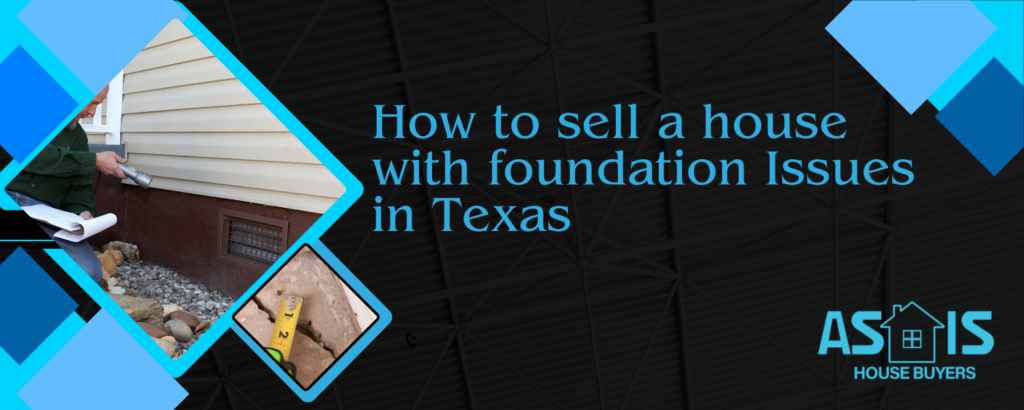
The majority of Texas homeowners who call me have spent three weeks Googling foundation repair companies and two sleepless nights convinced their house is unsellable. It is not. Foundation issues are one of the most common problems I see across the state, from older pier and beam bungalows in Houston’s Oak Forest neighborhood to slab homes in Frisco subdivisions built on DFW’s notoriously active clay. You’ve got legit options, and this guide takes you through every one of them.
Can You Even Sell a House with Foundation Problems?
In Texas, homes are taking longer to sell, with the average days to close extending to 112 days in Q1 of 2026. Add to that foundation problems, and a traditional listing can stretch even further. But “longer” doesn’t mean “impossible,” and it certainly doesn’t mean you need to eat a huge repair bill before you list.
That’s what the Salinas family learned firsthand. I met them last fall when they contacted me about a house in Pflugerville, a suburb northeast of Austin that’s rapidly grown over the last decade. They’d been paying on two mortgages for a year with the house sitting empty after a job transfer. The garage was filled with two decades of tools they never got around to clearing out, and a structural engineer’s report on the foundation had spooked two previous buyers. We closed weeks after their first call and have had zero repairs. Their situation was fixable; they just needed someone who bought properties in exactly that condition (and didn’t flinch at foundation reports). Selling with foundation problems is not a special kind of impossible real estate. Each year, thousands of Texas properties change hands with known foundation problems. Buyers — mom-and-pop investors to big iBuyers — factor those issues into their offers. The house may sell. Your job is to figure out which method puts the most money in your pocket with the least amount of grief.
One thing I’ve learned from buying houses all over Texas: sellers almost always overestimate how much a foundation problem will scare off every single buyer. Yes, retail buyers. Cash investors rarely.
What Counts as a Structural Issue in a Texas Home
Are those cracks in your drywall just a cosmetic annoyance or an indicator that your slab is actively moving? “How much will this cost?” It’s the question every homeowner asks before committing to anything, and the answer matters. Not every crack is a sign of a structural problem (width and direction tell you a lot).
Actual structural issues would be the foundation walls, the concrete slab itself, or the subfloor system supporting the weight of the house. If you notice cracks running diagonally from the corners of door frames, if your floors noticeably slope to one side of a room, if doors and windows are stuck in certain seasons where they used to open and close easily, or if gaps are opening between brick exterior walls and the roofline, you should have a licensed structural engineer inspect your home. A crack in sheetrock along a seam is not the same as a stair-step crack running through the mortar of a brick wall.
There are 2 types of foundations for Texas homes. Slab-on-grade is the construction method of choice for new subdivisions throughout the Metroplex and San Antonio. Older homes, especially those built before 1960 in neighborhoods like Houston’s Heights and Montrose, tend to have pier-and-beam foundations. The clay soil under the slabs tends to swell and shrink, causing the slabs to heave or settle unevenly. Pier-and-beam foundations can be affected by moisture, drainage problems, and wood rot in the subfloor.
The Metroplex of Dallas-Fort Worth sits atop some of the most expansive clay soil in the country, and DFW foundation companies have some of the most experience in the world dealing with it. Roots of large, live oaks and pecan trees routinely invade plumbing lines and interfere with soil moisture around the edges of foundations. Drainage problems make things worse; water standing against the slab is one of the quickest ways to accelerate settlement. The first opinion should be from a structural engineer, not a foundation repair company that has a vested interest in your repair bill.
What Texas Law Says About Disclosing Foundation Problems
Texas disclosure law is not optional, and getting it wrong can be a costly mistake. A seller who has undisclosed foundation damage that shows up after closing might wind up spending a lot more in legal fees than they ever would have spent on the repair.
Texas Property Code Section 5.008: The Seller of residential real property shall prepare and furnish to the Buyer a Seller’s Disclosure Notice. That form asks directly about structural defects, including foundation issues. If you know there’s a problem, then you must. If you fail to disclose a known material defect, you may be subject to rescission of the sale, damages, and attorney’s fees.
Some sellers think selling a home “as-is” means they don’t have to disclose anything. It does not. Selling as-is just means you’re not agreeing to make repairs, not that you get to skip the paperwork. Disclosure requirements still apply, and buyers still have the right to a home inspection.
The only thing you can legitimately leave blank is something that you truly do not know. If you inherited the property and are not familiar with repairs or previous damage, you can indicate this on the form. The Texas Real Estate Commission publishes the standard disclosure form and instructions on how to fill it out. Getting this stuff right up front protects you long after closing day, and I’ve seen disputes come back up years later over disclosures that were rushed.
How Bad Is the Foundation Damage, Really?
Severity is almost always the first question, and the answer is rarely as bad as that first inspection report sounds. I had a seller in Cedar Park call me after a home inspector found foundation movement during a buyer’s inspection. Friday, the report was out, the deal fell through, and she was sure the house was worth nothing overnight. The engineer she hired three days later found modest differential settlement, less than an inch, fixable with six piers (a common fix in Central Texas clay).
Severity can range from hairline cracks that don’t require any repair at all to full perimeter failure that compromises livability in the home. Most of the Texas sellers are somewhere in between those extremes. The best picture will come from a licensed structural engineer, not a Contractor quoting you for repair work. A professional engineering evaluation will cost $300-$600, but it is a powerful document (I’ve used it in negotiations), whether you decide to repair or sell as-is.
The average cost of foundation repair in Texas is from $3,300 to $7,000 for moderate work, depending on the city and scope. Bigger jobs, such as underpinning the entire perimeter of a large Dallas home, can easily cost well over $15,000. Minor surface cracks sealed with epoxy can run just a few hundred dollars (pier-and-beam houses tend to be cheaper here). The location of your problem on this spectrum tells you everything you need to know about what to do next.
Home inspectors will flag foundation issues every time. It’s what they do. But a flag on an inspection report isn’t a death sentence on the sale. What counts is what the engineer says when the inspector raises the concern. Get that report before you list, so you’re not blindsided in the middle of a contract.
How Foundation Damage Affects Home Value in Texas

Texas average home values are now about $306,682, and buyers negotiating on a property with foundation issues regularly ask for price reductions that include repair estimates plus a risk premium. That risk premium is real. Some buyers still won’t buy a home with a previous foundation problem without a warranty from the repair company, even after repairs.
The foundation repair estimate is the starting point for price negotiations between buyers and their agents. They’ll usually add 10 to 20 percent to cover unknowns, such as plumbing damage under the slab, drainage corrections, or retaining walls that weren’t included in the original quote. A seller who walks into those negotiations without a report from their own engineer is at a disadvantage. The mutual interest of the buyer’s inspector and the buyer’s contractor is not yours.
Property appraisers take the condition of the foundation into account directly. FHA and VA lenders will often not fund a purchase until foundation issues are remediated, which removes a significant portion of the buyer pool from a conventional listing. That leaves cash buyers and investors, and that’s really something to embrace rather than fight because they’re not going to walk away over a cracked footer like a nervous first-time buyer will.
How Buyers and Home Inspectors React to Foundation Issues
Most retail buyers panic when an inspection report shows foundation movement. Their lender gets involved, and if it’s an FHA-backed loan, that lender is going to want repairs done before closing. Conventional financing sometimes allows escrow holdbacks. That is lender dependent, loan to value ratio, and how bad the damage looks on paper. If you haven’t gotten your own engineering opinion, you are negotiating blind.
Cash buyers and real estate investors respond differently. They’ll price the property on after-repair value minus costs, so an inspection report won’t rattle them emotionally. They have seen it before. AS-IS House Buyers LLC, for example, purchases properties in this condition, and they do all of the repair coordination themselves, so you’re not left having to handle contractors or wait on permit approvals before the deal can close.
One pattern I see again and again: sellers who go through a failed conventional sale before calling an investor lose 2 to 3 months, and end up accepting a lower number than they would have gotten if they had called earlier. The failed sale is not only a waste of time, but it also creates a paper trail that other buyers can see (days on market tells a story), and it signals that something is wrong with the property before they even set foot inside.
Is Foundation Repair Worth the Cost Before Selling?

One of the most painful things I see is when a seller spends money on foundation repairs before listing and doesn’t get it back in the sale price. It happens more often than sellers expect.
The math only works if the cost to fix is well below the resulting gain in market value and if the retail buyer pool is large enough to justify the wait. Buyers have options and can be choosy in a balanced market like Texas is now, with a 5.5-month supply of housing inventory statewide. A home with a repaired foundation that still needs a kitchen update and new flooring isn’t going to automatically get multiple offers (I’ve seen sellers learn this the hard way).
Get quotes from at least two licensed contractors before making any decisions on repairs. Price volatility in Texas metros is more than you’d think. A $6,000 job in Garland could be $9,500 in an Austin-area neighborhood where crews are busier, and the Hill Country limestone makes the pier installation more difficult (I’ve seen limestone add weeks to a timeline). Read the complete quote.
Retail buyers like repair warranties, and a transferable warranty from a good company can add real value to a listing. Without it, buyers treat the repair as if it never happened. So, if you do repair, use a company that offers a lifetime transferable warranty (not all foundation firms do) and have that documentation ready for the listing.
If the repair cost is over $20,000 or you are short on time, the math almost always favors selling the property as-is in Corpus Christi. NAR data on seller concessions consistently show that the renovation-to-value return for structural repairs is among the lowest of any home improvement category.
Repair the Foundation or Sell As-is: Which Makes More Financial Sense?
In a few instances, the repair-first approach makes sense: the damage is minor, the cost to repair is under $5,000, the balance of the home is in good shape, and you have three to five months before you have to close. If you cannot meet those conditions, then it is usually better to just sell as-is to a cash buyer in Texas, even though it feels like you are leaving money on the table (and in my experience, it rarely is).
Major structural jobs: Moderate or severe foundation repair work can cost $30,000 or more. And add the carrying costs while you wait for the repair to be done and the permits to close, and then subtract the 5-6% real estate agent commissions and the concessions buyers will still negotiate even after they see the completed repair. The net number is often near or below what a cash investor would pay today.
Linh Vargas called me on a Wednesday for a house in Katy, a suburb west of Houston, where her mother had just moved into assisted living on short notice. Linh lived out of state and couldn’t handle the contractor visits, permit pulls, or the emotional toll of sorting through everything. The foundation had a pier-and-beam subfloor problem, along with a moisture problem from years of poor drainage along the back of the property. We were under contract in less than 48 hours and closed around HER’s schedule. She kept one box of her mother’s things. The rest she left up to us.
AS-IS House Buyers LLC takes on cases like Linh’s all the time. No cleaning, no repairs, no open houses. If you’re dealing with a foundation issue and a life situation that doesn’t allow you six months to manage a renovation, a cash offer conversation costs you nothing and tells you exactly where you stand.
Frequently Asked Questions
How Hard Is It to Sell a House with Foundation Issues?
It depends on your style and your market. Listings with foundation issues do sell, but they take longer, get more conditional offers, and often fall out of contract once the inspection report hits. Selling to a cash buyer or investor eliminates most of those friction points because those buyers incorporate the condition into their offer upfront and don’t require lender approval to close.
Do You Have to Disclose Foundation Issues in Texas?
Yes. Texas law mandates sellers of residential property to complete a Seller’s Disclosure Notice, which asks simple questions about structural defects and foundation problems. Skip or hide a known issue, and you are exposing yourself to legal liability after closing; a buyer can rescind the sale and sue for damages. Tell what you know. Write down what you don’t know. If you are not sure how to properly fill out this form, see a Texas real estate attorney.
How Much Does It Cost to Fix Foundation Issues in Texas?
Moderate work on a Texas foundation averages between $3,300 and $7,000, but there is a wide range of costs. The cost of minor crack repairs using epoxy injection can be a few hundred dollars. Severe structural jobs requiring full perimeter piers can be upwards of $15,000 to $30,000. Getting quotes from at least two licensed contractors and having an independent engineering assessment done can give you a good idea of where your property sits.
How Much Less Should You Offer on a House with Foundation Issues?
Buyers will usually start with the cost of the repair estimate and add a risk buffer of 10 to 20 percent on top of that. If a car has a $10,000 repair estimate, that could mean asking the price down by $12,000 to $15,000. The amount of discount will also be dependent on how much damage there is, whether there is a transferable warranty, and how competitive the local market is at the time of sale.
If you’re on a Texas property with foundation problems and you’re unsure which way makes sense, contact AS-IS House Buyers LLC. They’ll evaluate the property, go over your numbers transparently, and provide an offer you can weigh against other options. No strings attached, no pressure, just a real discussion about what your house is worth in its current condition.